
6 Things to Know Before Buying Surface Protection Film


Surface protection film is widely used in industries where materials must stay clean and scratch free during manufacturing, storage, and transport. Metal sheets, glass panels, laminates, plastic boards, and decorative surfaces often move through many stages before reaching the final user. During these stages, surfaces may come into contact with tools, dust, and regular handling. A protective film works as a temporary layer that helps keep the surface in good condition until installation or final use.
Many manufacturing units depend on experienced Surface Protection Film Manufacturers to supply films that protect materials while they move through production lines. Before purchasing this film, it is helpful to understand a few practical points that influence its performance.
Understanding the Role of Surface Protection Film
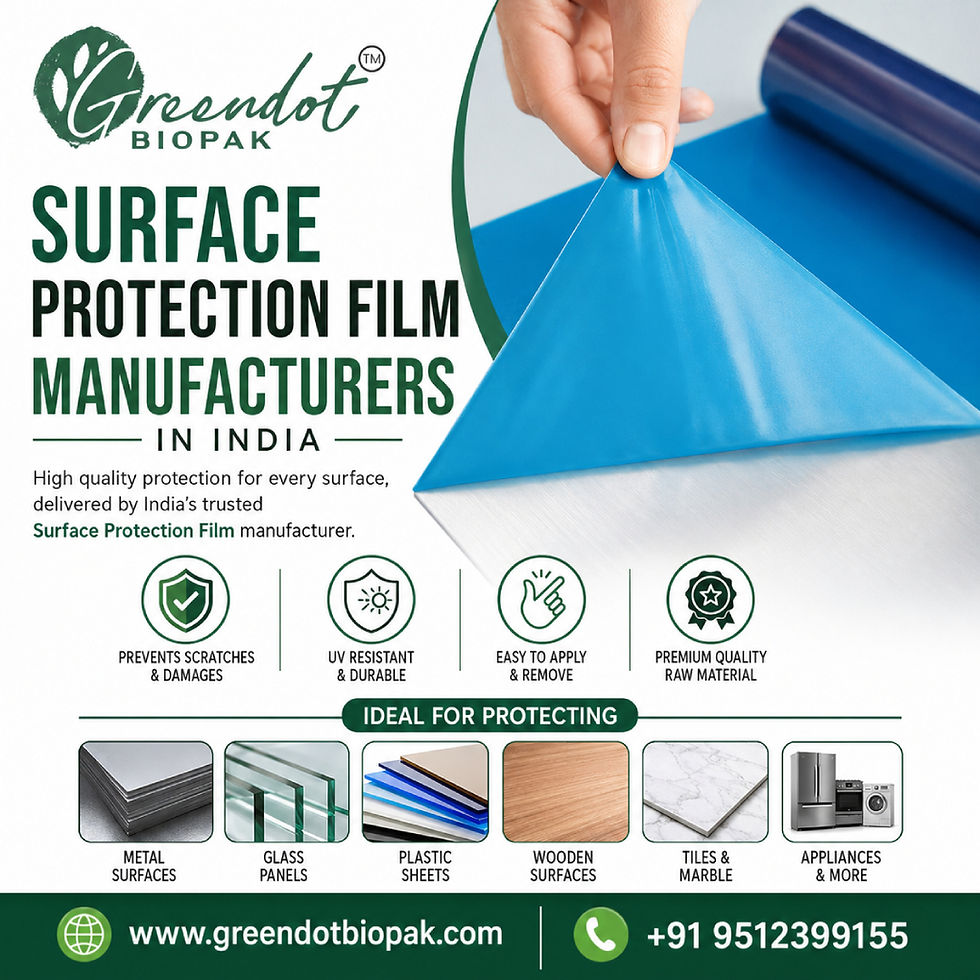
Surface protection film is a thin adhesive film placed on the outer layer of a material. Its main function is to protect surfaces from scratches, stains, dust marks, and handling damage during fabrication and transport.
Industries that commonly use these films include metal fabrication, construction materials, appliance manufacturing, furniture production, and glass processing units In these industries, finished surfaces must remain clean and undamaged until the product reaches the final stage. Companies working with large quantities of material often purchase from experienced Surface Protection Film Manufacturers in India because these manufacturers produce films suitable for different surfaces and industrial conditions.
1. Type of Surface Being Protected
The first factor to consider is the material that needs protection. Every surface behaves differently when a film is applied. For example, stainless steel sheets used in fabrication workshops require films that remain stable during cutting and bending. Glass panels used in construction need films that remove easily without leaving adhesive marks.
Plastic sheets, aluminum panels, and decorative laminates also require films suited for their surface properties. Surface finish is another factor. Some materials have glossy finishes while others have matte or textured surfaces. Adhesion strength must match the surface finish so the film sticks properly during processing and removes smoothly later.
2. Adhesive Strength and Clean Removal
Adhesive strength plays an important role in the performance of surface protection film. If the adhesive is too weak, the film may lift during processing or transport. If the adhesive is too strong, removing the film may become difficult.
A balanced adhesive level helps the film stay in place during fabrication and also allows easy removal once the product reaches its final stage. Clean removal is especially important for decorative panels, glass sheets, and finished metal surfaces where appearance matters after the film is removed.
3. Film Thickness and Protection Level
Surface protection films are available in different thickness levels. The thickness of the film decides how much protection it can provide during handling and processing. Thicker films provide stronger protection against scratches and marks during heavy industrial work.
They are commonly used in fabrication units where metal sheets go through bending, cutting, or drilling. Thinner films are usually applied when materials require light protection during packaging or short distance transport. Selecting the correct thickness helps maintain the appearance of the material during production.
4. Exposure to Temperature and Outdoor Conditions
In many industries, materials may remain stored outdoors or travel long distances during transport. Sunlight and temperature changes may affect the performance of protection films. Films used in such conditions must maintain stable adhesion until removal.
Materials such as metal sheets stored in open yards or transported between cities may require films that handle exposure to sunlight and dust. Temperature resistant films help maintain performance even when materials remain outside for longer periods.
5. Ease of Application During Production
Manufacturing units often apply surface protection film on large numbers of sheets every day. Films that apply smoothly without wrinkles or bubbles help workers complete the job quickly. Good roll quality also plays a role in smooth application.
The film should unwind evenly and attach properly to the surface. This helps reduce delays during production. Many businesses prefer working with experienced Surface Protection Film Manufacturers because they supply films suitable for regular industrial application.
6. Experience of the Manufacturer
The experience of the manufacturer also matters while purchasing surface protection film. Producing high quality films requires proper control of adhesive formulation, film thickness, and roll quality.
Manufacturers who have long experience in this field understand the requirements of different industries such as metal fabrication, construction materials, glass processing, and appliance manufacturing. Companies sourcing films from established Surface Protection Film Manufacturers in India often receive materials suitable for regular industrial use.
Why Choose Us
Greendot Biopak works in the field of protective packaging materials and surface protection films used in various industries. The company focuses on manufacturing films used for protecting metal sheets, laminates, glass panels, and plastic surfaces during handling and transport. Businesses looking for dependable Surface Protection Film Manufacturers often prefer manufacturers with experience in industrial applications.
Greendot Biopak supplies films designed for different surface types and adhesive requirements used during fabrication and storage. Recognized as one of the Surface Protection Film Manufacturers in India, Greendot Biopak supplies films used in fabrication units, construction materials, panel manufacturing, and other industries where surface protection is required before installation or final delivery.
Conclusion
Surface protection film plays an important role in maintaining the appearance of materials during fabrication, storage, and transport. Selecting the correct film requires attention to surface type, adhesive strength, film thickness, environmental exposure, and application method. Working with experienced Surface Protection Film Manufacturers in India helps industries obtain films suitable for their production environment.
Proper film selection helps keep materials clean and protected until the final stage of use. Companies such as Greendot Biopak continue to supply protection films used across multiple industrial sectors where maintaining surface quality during handling remains important.

Comments